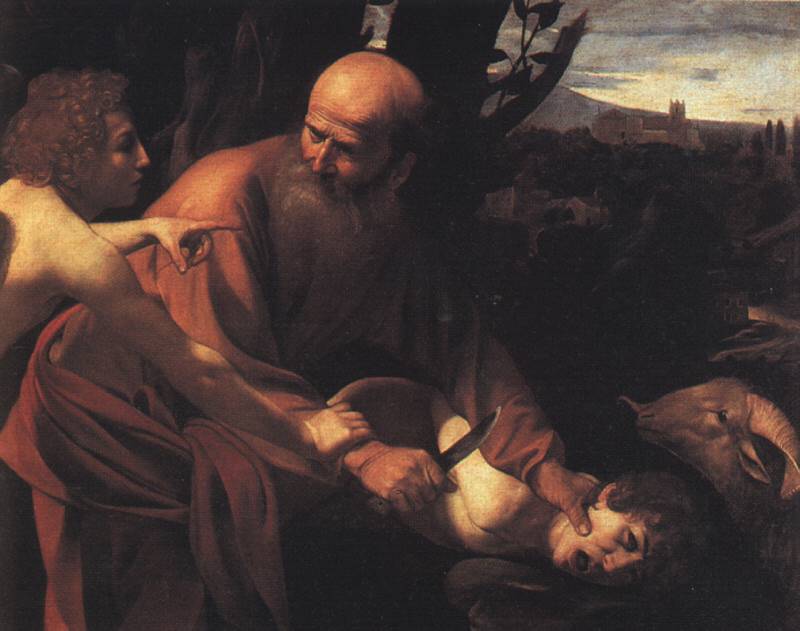
Thursday, June 28, 2007

How to succumb to the violence in your heart:


Instantly the spirit of hell awoke in me and raged. With a transport of glee, I mauled the unresisting body, tasting delight from every blow; and it was not till weariness had begun to succeed that I was suddenly, in the top fit of my delirium, struck through the heart by a cold thrill of terror. A mist dispersed; I saw my life to be forfeit; and fled from the scene of these excesses, at once glorying and trembling, my lust of evil gratified and stimulated, my love of life screwed to the topmost peg. . . . I set out through the lamplit streets, in the same divided ecstasy of mind, gloating on my crime, light-headedly devising others in the future, and yet still hastening and still harkening in my wake for the steps of the avenger. Hyde had a song upon his lips as he compounded the draught, and as he drank it pledged the dead man. The pangs and transformation had not done tearing him, before Henry Jekyll, with streaming tears of gratitude and remorse, had fallen upon his knees and lifted his clasped hands to God. The veil of self-indulgence was rent from head to foot. I could have screamed aloud; I sought with tears and prayers to smother down the crowd of hideous images and sounds with which my memory swarmed against me; and still, between the petitions, the ugly face of my iniquity stared into my soul. . . .

I resolved in my future conduct to redeem the past; and I can say with honesty that my resolve was fruitful of some good. . . . but I was still cursed with my duality of purpose; and as the first edge of my penitence wore off, the lower side of me, so long indulged, so recently chained down, began to growl for licence. Not that I dreamed of resuscitating Hyde; no, it was in my own person that I was once more tempted to trifle with my conscience; and it was as an ordinary secret sinner that I at last fell before the assaults of temptation.

There comes an end to all things; the most capacious measure is filled at last; and this brief condescension to my evil finally destroyed the balance of my soul. And yet I was not alarmed; the fall seemed natural, like a return to the old days before I had made my discovery. It was a fine, clear January day, wet under foot where the frost had melted, but cloudless overhead; and the park was full of winter chirrupings and sweet with Spring odours. I sat in the sun on a bench; the animal within me licking the chops of memory; the spiritual side a little drowsed, promising subsequent penitence, but not yet moved to begin. After all, I reflected, I was like my neighbours; and then I smiled, comparing myself with other men, comparing my active goodwill with the lazy cruelty of their neglect. And at the very moment of that vainglorious thought, a qualm came over me, a horrid nausea and the most deadly shuddering. These passed away, and left me faint; and then as in its turn the faintness subsided, I began to be aware of a change in the temper of my thoughts, a greater boldness, a contempt of danger, a solution of the bonds of obligation. I looked down; my clothes hung formlessly on my shrunken limbs; the hand that lay on my knee was corded and hairy. I was once more Edward Hyde, the common quarry of mankind, hunted, houseless, a known murderer, thrall to the gallows.


Dr. Jekyll and Mr, Hyde, Robert Louis Stevenson (1886).

Tuesday, June 26, 2007

To God the Lord belong escapes from death....


God is to us a God of deliverances;
And to God the Lord belong escapes from death.

Psalm 68:20

Not sure why this verse is striking such a chord with me at the moment. Maybe because it speaks about the hope that God will come through for us with such an active, visceral tone. I love the image. Steve used to say "Jesus makes a way where there is no way." A lot of people really need to believe that right now. I know I do. I am starting to ask for courage not just to survive, but to prosper and thrive, even in the face of evil and sin and sorrow and grief. I am realizing that those things will always be there, and living hopefully and faithfully is not wishing for the absence of those things, but pushing forward in spite of them. That evil is mocked most powerfully when, in its very presence, we hope in and believe the gospel anyway.

Sorry for the Sunday school lesson.

Tuesday, June 19, 2007

A tribute to EOMS; a Stones history lesson

Life has been brutal for the last year and a half. To the extent I am even functioning, it is probably because I am in a state of shock, sort of like how a chicken can be decapitated and still run around for a few minutes before its body finally succumbs to death. That's me: a headless chicken running around the yard.

And yet: in the midst of disorder and violence and sorrow, there have been a few faint glimmers of hope. A tender moment here and there with my children. Feeling myself responding to things that once would have provoked anger or fear in a different manner, in a way that suggests some small steps of growth or greater understanding of grace, and being surprised.

One of my survival mechanisms in times of crisis is to retreat into music, into thinking about it a lot and dwelling on favorite lyrics, making new mixes for the iPod (formerly: making new mix tapes, preferably Maxell, Memorex or Denon, never Sony). For the last couple of days I have been consumed again by the brilliance of 1968-1972 era Stones, in particular Exile On Main Street. I never go looking for things like this. It is serendipity. My renewed love for EOMS started with hearing Loving Cup on Sirius radio one night and thinking: "shite that is a great song, how did I ever let myself go years without listening to that?" Then, bam, I am off of the Smiths and the various other early 1980's British bands that have preoccupied me lately and back onto the Stones.

And his coat is torn and frayed,
It's seen much better days.
Just as long as the guitar plays
Let it steal your heart away,
Let it steal your heart away.

The thing about this particular era of the Stones is that it shouldn't work at all. It's easy to understand the cheeky, pop guitar driven sound of early to mid-1960's Stones because it is, essentially, very British, even though their inspiration is American blues and r&b. The early Stones sound (through Aftermath, 1966) fits right in with that era of the Kinks (the most British of them all), the Who, and pre-Revolver Beatles. Let's just forget that 1967's Their Satanic Majesties Request ever happened. That disgrace of an album easily could have finished them. But then they hit a four album cycle--Beggar's Banquet, Let It Bleed, Exile, Sticky Fingers, that is probably rivaled only by the Beatles from 1966-1969 in its sustained brilliance (and even the Beatles had some hiccups in there--Magical Mystery Tour, anyone?) Beggar's Banquet (1968) was a tentative step toward a new Stones sound. By 1969, with Let It Bleed, and culminating in EOMS, they became something completely different. They somehow assimilated (rather than merely imitated) all of their American influences--blues, r&b, country, and made it into a kind of rock and roll that transcended all of those categories and defied easy description. How did a bunch of middle-class English jacklegs with Cockney accents become such remarkable interpreters of rural American music and urban black music? There is no way it should work. It should come across as being just as inauthentic and contrived as Pat Boone's heavy metal album. But, somehow, that sound and that aesthetic really resonates with me. EOMS has been one of my five favorite albums since about 1988. If you don't own it, get it.

Inevitably, the fuse burned out. If the biggest shortcoming of the Beatles was that they tried too hard, then the Stones greatest musical sin was laziness, complacency. 1973's Goat's Head Soup was good but not transcendent. 1974's It's Only Rock and Roll was another step down, 1976's Black and Blue was mediocre at best. They briefly revived from 1978-1981 and put out some good albums (Emotional Rescue, Some Girls, Tattoo You) but, really, those were just collections of songs of middling quality saved by a few very strong tracks each--nothing like the consistency of Let It Bleed or EOMS or Sticky Fingers. It's hard to look at the Stones now and not feel like they are diminishing their legacy with each corporate sponsored mega-tour and retreaded-riff album. I don't begrudge their making a living, they've earned the right to do whatever they want and I'm not going to cynically condemn them for it. I just hate to know that a whole generation of music lovers out there knows the Stones only by what they are now.

I hear you talking when I'm on the street,
Your mouth don't move but I can hear you speak.
What's the matter with the boy?
He don't come around no more,
Is he checking out for sure?
Is he gonna close the door on me?

I'm always hearing voices on the street,
I want to shout, but I can't hardly speak.
I was making love last night
To a dancer friend of mine.
I can't seem to stay in step,
'Cause she come ev'ry time that she pirouettes over me.

And I only get my rocks off while I'm dreaming,
I only get my rocks off while I'm sleeping.

I'm zipping through the days at lightning speed.
Plug in, flush out and fire the fuckin' feed.
Heading for the overload,
Splattered on the dirty road,
Kick me like you've kicked before,
I can't even feel the pain no more.

But I only get my rocks off while I'm dreaming,
I only get my rocks off while I'm sleeping.


Wednesday, May 30, 2007

Hmmmmm.....

Not really sure what to do with this blog. No one reads it. I don't really want it to be a journal, or a confessional, or a cry for help. I don't have insight or wisdom to share with anyone (even if someone did read it). So I think I might just make this a repository for quotes and the like that come to me at particular moments, so that looking back I can say, hey, that movie quote or lyric was on my mind at point X in my life.

You and me, we were the pretenders
We let it all slip away
In the end what you don't surrender
The world just strips away.

--Bruce Springsteen

Thursday, April 12, 2007

All This Useless Beauty. . . .


"There were songs about betraying your principles, letting yourself down and being diminished –– 'Little Atoms', 'You Bowed Down' and 'Starting to Come to Me'. None of these lyrics contained any anger toward the characters, only disappointment that they had settled for so little. I could just as easily have been talking to myself."

Elvis Costello, liner notes to All This Useless Beauty.

That is all for now.

Tuesday, February 27, 2007

Announcements

At this moment, I am on hold with a company called "Computershare," trying to arrange the transfer of some stock owned by a dead person (relax, no one you know). I have been on hold for five minutes and expect, based on past experience with Computershare, to be on hold for another 25 minutes or so, at which point I will hang up, utter some mild profanity, and move on to my next task. My job rocks, folks! So to redeem the time I offer this humble post, a response to a voice crying in the wilderness of cyberspace: update, please.

(1) First, a confession: my vow to listen only to the Police for one week was broken less than 48 hours later. For some reason I woke up one morning humming "A Rush And A Push And The Land Is Ours," and there I went, off on a tangent of listening exclusively to "Strangways, Here We Come" and "The Queen Is Dead" for several days. Now I can't get "Death of a Disco Dancer" out of my head. Maybe it's because the following perfectly sums up my point of view right now:

Love, peace, harmony.
Love, peace and harmony.
Very nice.
Very nice.
Very nice.
Maybe in the next world.


(2) Last night I officially got all of my stuff out of the Cat's house/basement. That felt good. A little moment of closure and a feeling of having taken some infinitesimally small step forward. But I have too much stuff. And by stuff, I mean crap that no one else would want, so don't even bother asking. But you're more than welcome to go through it all and confirm that for yourself.

On hold: twelve minutes and counting. . . .


(3) Sunday I got out my motorcycle (also in Cat's basement). Perfect weather the last few days for riding. Rode it to work on Monday morning in a grey pinstripe suit. Felt very subversive.

(4) I've written some bad poetry about bad things that have happened to me and bad things that people have done to me and bad things I have done to other people. I'll not share it with you. I have a single shred of dignity left, and I wish to preserve it. And for your own sake, be glad.

Computershare: you suck ("we are currently experiencing unusually high call volume . . . .")

(5) Sorted through several boxes of CDs, culled out dozens ofCDs that are unfit to be in my collection. Will consider giving away as party favors/door prizes or using as drink coasters. Example: Wang Chung: "Points On A Curve."

I have now been partially lobotomized by the muzak of Computershare. Very Orwellian, if you ask me. Lost track of the time. Twenty minutes? More? Finger reaches for the release button on my phone. Wait, give it a minute. Is this what hope feels like? Waiting for something good when there seems to be no reason to wait any longer? I just went philosophical on your ass, Computershare! How does that make you feel?

(6) Some brooding chap once asked what Soren Kierkegaard meant by some quote about love that doesn't probably doesn't translate very well from Danish or whatever into English. At the risk of opening the lid up a little too much on my own life, here is what love might look like to me: choosing to own--to possess, to honor--a decision to love someone even when it becomes really hard and ceases to be rewarding or nourishing to you, with the hope that the decision to love ultimately is the reward and nourishment in itself. But, you say, you just referred to love in your definition of love, you moron. Fair enough. Blame the muzak. Maybe love is choosing to be "for" someone, to try to make that person more important to you than yourself.

Back in a minute. . . Computershare just picked up. Hope wins!

Crap. On hold again . . . . Hope is illusory.

Back to love. In asking for love, are you trying to possess the person whose love you seek? It's the old "if you love something set it free" thing. Are you putting yourself above them by asking them to love you? Maybe so, but maybe not. Of course it is true that you can't make someone love you. But the very act of asking someone to love you is to ask them to give up some of their freedom and to become invested in your life, to cede some of their autonomy to a decision that may not always reap obvious benefits.

Off hold again! Successfully completed phone call! Thanks, Computershare! Hope rules!

We'll come back to love later. I'm outta here! Exclamation points for everyone!!!!!!

Monday, February 5, 2007

Many miles away there's a shadow on the door . . . .


of a cottage on the shore of a dark Scottish lake.


I am dedicating this week to listening to Synchronicity, the magnum opus of the great (but no longer late, apparently) band, The Police. Why? Glad you asked. On February 11 at the Grammy Awards, the Police are reuniting for their first public appearance together in over twenty years, not counting their induction into the Rock and Roll Hall of Fame. It is anticipated that this will lead to a world tour this summer. So for the next seven days I will listen exclusively to the Police, and especially Synchronicity (well, and Ghost In The Machine, which may really be my favorite Police album). Synchronicity was the fifth and last Police album, released in 1983. It spent months at #1 on the Billboard album chart back when that actually meant something (I think Michael Jackson's Thriller spent most of 1983 at #1). It has sold over 8 million copies. So at their apex, touring stadiums, hit after hit, the Police . . . vanish. They never even officially broke up. They just went away. Then Sting released Dream of the Blue Turtles, a fine album, then he released Nothing Like the Sun, and by that point it was clear that The Police were gone. Huh? For context, imagine if U2 had just gone their separate ways after The Joshua Tree, without explanation and without warning. Both Synchronicity and Joshua Tree were the fifth studio albums by the respective bands, both bands were three piece outfits (okay, just kidding Adam Clayton--you count, too), and both albums launched their respective bands into the stratosphere, from semi-cult status to worldwide phenomenon. In 1983, The Police were the BIGGEST BAND IN THE WORLD. Then there was a vacuum until U2 assumed the mantle in 1987. So just imagine if U2 had disbanded in 1988 and Bono had gone on to a successful career making adult soft-rock that culminated in a whole f'in album of songs played on the lute. You would be pretty pissed, right? That's how I feel about The Police. And that is why I am excited about 2/11/07 and the Grammy's, which I will watch for the first time in many years. And that is why I will pay whatever I have to for tickets if The Police do indeed tour this summer.

Back to Synchronicity, the album. I am dedicating this week to it for a number of reasons. First, it was last. Second, it has, arguably, the best songwriting, which was the product of several converging forces: (1) the breakup of two marriages, Sting's and Andy Summer's, before and during the making of the album; (2) Sting's fascination with Jungian archetypes and psychology, seeking a deep connectedness between seemingly disconnected and unrelated forces. What is most interesting to me is how something as dry as Jungian psychology became so volatile when allied with deeply painful personal experiences. It could have been an awful, overbearingly didactic sermon of an album. Instead, it was both deeply personal and universal, sentimental at times without being maudlin, confessional but not creepy, self-aware but unselfconscious. It's risky for a legit, critically-acclaimed, serious rock band to put out a song called "King of Pain." You risk being mocked, being accused of overreaching, of losing that detached irony that bands like the Police are supposed to embody (keep in mind, nobody had ever heard of this strange thing called "emo" in 1983, and The Police probably would have kicked Emo's ass if they had met it in a back alley). But they pulled it off. And Synchronicity has been one of my favorite albums for 23 years. That's a lot of staying power. I'll venture to say that precious little else from 1983 has aged as well, for instance: Men At Work, which won a Grammy for best new album or artist or something; Elvis Costello's Punch The Clock, showing even he could succumb to mediocrity from time to time; Paul McCartney's "Say, Say, Say" which actually went to #1, but which is now played on endless repeat in Iraqi prison camps. But The Police endure.

The Police are dead. Love live The Police.