
Tuesday, January 22, 2008

Monday, December 24, 2007
Merry Christmas to all, and to all, a good night. . . .
When Christianity says that God loves man, it means that God loves man: not that He has some "disinterested," because really indifferent, concern for our welfare, but that, in awful and surprising truth, we are the objects of His love. You asked for a loving God: you have one. The great spirit you so lightly invoked, the "lord of terrible aspect," is present: not a senile benevolence that drowsily wishes you to be happy in your own way, not the cold philanthropy of a conscientious magistrate, nor the care of a host who feels responsible for the comfort of his guests, but the consuming fire Himself, the Love that made the worlds, persistent as the artist's love for his work and despotic as a man's love for a dog, provident and venerable as a father's love for a child, jealous, inexorable, exacting as a love between the sexes.
C.S. Lewis, The Problem of Pain
Hopefully you are doing something more festive today than playing around on the internet. I've finished putting the kids' toys together (mostly) and just have a few more presents to wrap. I have a broccoli casserole to make for dinner tonight. But I'm taking a little break to wish everyone who might happen to read this blog a very sincere Merry Christmas. I hope that Jesus becomes more real to you this year than He was last year. I hope that all of your suffering, torment, sorrow, grief, anguish, frustration, anger, confusion, anxiety and pain are used by Him to produce a deep and resonant joy in you that could only have come from having endured what you have had to go through. I hope for hope. I hope that we all will see Him abiding with us--not just individually, but as a community, and I hope that we will learn to lean on each other and to bear one another's burden's even more in the next year. I hope that none of us will feel alone, even as we all acknowledge that at the core of each of us is a loneliness that cannot be satisfied in this life. I hope that we can all continue to weep together, but that some of those tears will be tears of joy--when Jack goes home, when Caleb arrives, when we find work, when we find rest, when our secret sorrows become causes for public rejoicing--when a hundred other unknown and unforeseen blessings fall on us. Most of all I hope that we all will take heart and really believe that He is real, and that what He says is true, and that we do not need to be afraid.
Peace,
TillmanTillmanTillman
Friday, December 21, 2007
I shall not die, but live, and declare the works of the Lord . . . .
As promised, our featured guest blogger today is John Newton. John's been dead for a while, so he's not producing any new material right now. These are his thoughts on sin and the heart of man, set out in a letter to a friend, circa March 1772 (shamelessly cut and pasted from the internet without seeking any permission from any publisher whatsoever). Even though Newton wrote some really famous hymns, a lot of people (well, me, but I'm sure there are others) think that his greatest gift was his private correspondence to his friends and adversaries. Without further adieu, and with apologies in advance for the length:
I think my last letter turned upon the apostle's thought, Galatians 5:I7. "Ye cannot do the things that ye would." In the parallel place, Romans 5:19, there is another clause subjoined, "The evil which I would not, that I do." This, added to the former, would complete the dark side of my experience.
Permit me to tell your Lordship a little part (for some things must not, cannot be told), not of what I have read, but of what I have felt, in illustration of this passage. I would not be the sport and prey of wild, vain, foolish, and worse imaginations; but this evil is present with me: my heart is like a highway, like a city without walls or gates. Nothing so false, so frivolous, so absurd, so impossible, or so horrid, but it can obtain access, and that at any time, or in any place: neither the study, the pulpit, or even the Lord's table, exempt me from their intrusion.
I sometimes compare my words to the treble of an instrument, which my thoughts accompany with a kind of base, or rather anti-base, in which every rule of harmony is broken, every possible combination of discord and confusion is introduced, utterly inconsistent with, and contradictory to, the intended melody. Ah! what music would my praying and preaching often make in the ears of the Lord of Hosts, if he listened to them as they are mine only! By men, the upper part only (if I may so speak) is heard; and small cause there is for self-gratification, if they should happen to commend, when conscience tells me they would be struck with astonishment and abhorrence could they hear the whole.
But if this awful effect of heart-depravity cannot be wholly avoided in the present state of human nature, yet, at least, I would not allow and indulge it; yet this I find I do. In defiance of my best judgement and best wishes, I find something within me which cherishes and cleaves to those evils, from which I ought to start and flee, as I should if a toad or a serpent was put in my food or in my bed. Ah ! how vile must the heart (at least my heart) be, that can hold a parley with such abominations, when I so well know their nature and their tendency. Surely he who finds himself capable of this, may, without the least affectation of humility (however fair his outward conduct appears), subscribe himself less than the least of all saints, and of sinners the very chief.
I would not be influenced by a principle of self on any occasion; yet this evil I often do. I see the baseness and absurdity of such a conduct as clearly as I see the light of the day. I do not affect to be thought ten feet high, and I know that a desire of being thought wise or good, is equally contrary to reason and truth. I should be grieved or angry if my fellow creatures supposed I had such a desire; and therefore I fear the very principle of self, of which I complain, has a considerable share in prompting my desires to conceal it. The pride of others often offends me, and makes me studious to hide my own; because their good opinion of me depends much upon their not perceiving it. But the Lord knows how this dead fly taints and spoils my best services, and makes them no better than specious sins.
I would not indulge vain reasonings concerning the counsels, ways, and providences of God; yet I am prone to do it. That the judge of all the earth will do right, is to me as evident and necessary as that two and two make four. I believe that he has a sovereign right to do what he will with his own, and that this sovereignty is but another name for the unlimited exercise of wisdom and goodness. But my reasonings are often such, as if I had never heard of these principles, or had formally renounced them. I feel the workings of a presumptuous spirit that would account for everything, and venture to dispute whatever it cannot comprehend. What an evil is this, for a potsherd of the earth to contend with its Maker!
I do not act thus towards my fellow-creatures; I do not find fault with the decisions of a judge, or the dispositions of a general, because, though I know they are fallible, yet I suppose they are wiser in their respective departments than myself. But I am often ready to take this liberty when it is most unreasonable and inexcusable. I would not cleave to a covenant of works: it should seem from the foregoing particulars, and many others which I could mention, that I have reasons enough to deter me from this. Yet even this I do. Not but that I say - I hope from my heart-Enter not into judgement with thy servant, O Lord.
I embrace it as a faithful saying, and worthy of all acceptation, that Jesus Christ came into the world to save sinners; and it is the main pleasure and business of my life to set forth the necessity and all-sufficiency of the Mediator between God and man, and to make mention of his righteousness even of his only. But here, as in everything else, I find a vast difference between my judgment and my experience. I am invited to take the water of life freely, yet often discouraged, because I have nothing wherewith to pay for it.
If I am at times favoured with some liberty from the above-mentioned evils, it rather gives me a more favourable opinion of myself, than increases my admiration of the Lord's goodness to so unworthy a creature; and when the returning tide of my corruptions convinces me that I am still the same, an unbelieving legal spirit would urge me to conclude that the Lord is changed: at least, I feel a weariness of being beholden to him for such continued multiplied forgiveness; and I fear that some part of my striving against sin, and my desires after an increase of sanctification, arises from a secret wish that I might not be so absolutely and entirely indebted to him.
This, my Lord, is only a faint sketch of my heart; but it is taken from the life: it would require a volume rather than a letter to fill up the outlines. But I believe you will not regret that I choose to say no more upon such a subject. But, though my disease is grievous, it is not desperate; I have a gracious and infallible Physician. I shall not die, but live, and declare the works of the Lord.
Tuesday, December 18, 2007
Costco; a tribute to Pop
Last night I went to Costco to procure a dozen butter croissants for a dinner party (everyone else is cooking something; I was tasked, mercifully, with bringing "bread"). It's rare that a trip to Costco elicits any emotion out of me other than perhaps covetousness (is that even an emotion?), but as I strolled through the vast aisles of bulk sundries and holiday fare, my attention was captured by a product called "Uncle Milton's Solar System In My Room." As you can see from the picture below, it's a model solar system that you hang from your ceiling, and with your handy-dandy remote control you can make the planets orbit the sun (note: not to scale). I stared at it for a few minutes. My throat closed up. Tears welled in my eyes. I looked around nervously to see if anyone was noticing that I was having a breakdown in the middle of a big-box store. It's not that I love astronomy. I appreciate Galileo and Copernicus and all those guys, but I don't ever sit around thinking about them. But a remote control solar system that attaches to your ceiling is exactly the kind of thing that my grandfather would have bought for me when I was a kid. He was a huge science buff and always gave me "educational" gifts that were way beyond my years and/or aptitude--model rockets, chemistry sets, archaeology kits. I usually destroyed them far before I grew up enough to use them for their intended purposes.
The thing about Pop was, Pop thought that just about everything was interesting, and he wanted other people to think that everything was interesting, too. He lived by that--he gardened; he knew every native plant and animal in Alabama; he planted a vineyard, built a still and made muscadine and strawberry wine (in Blount County, Alabama--highly illegal, I imagine); he built a television out of a kit; he designed and built a house for his family (on Salter in Homewood); he could fix just about anything that ever broke--including my car on more than one occasion. He loved opera and classical music and could never understand why everyone else didn't. He learned to speak Spanish and French in his 60's and 70's. He was utterly devoted to my grandmother, who he met in Madison, Wisconsin when he was waiting to be shipped to the European theater during WWII. She was a Norwegian Lutheran who was an honor student at UW; he was a kid from rural Alabama who had just completed basic training. Madison, Wisconsin must have seemed as exotic as Paris or Rome. On their first date, they went to a bar on the campus at UW and Pop bought 9 beers for ninety cents. They agreed that whoever drank four the fastest would get to drink the ninth beer. My grandmother won, and Pop was in love. They married when he got back from Europe and were together for over sixty years. He raised six children on a modest income. My Dad was the oldest, and since I was Pop's first grandson, I was named after him.
Pop died in June after a long struggle with prostate cancer. I miss him. But I bought Uncle Milton's Solar System In My Room, which I am going to give to my nephews next week; and I won't tell them why I bought it, but I think my Dad will know.
Monday, December 17, 2007
More from Eugene Peterson
At some point I will cross the line into outright copy infringement. But the highest and best use of this blog space may be to pass along snippets of stuff I am reading.
More from Answering God: the Psalms as Tools for Prayer:
"Spiritualized prayer is denatured prayer, prayer in which all the dirt and noise of ordinary life is boiled out, It is a prayer that cultivates exalted feelings and sublime thoughts. It is prayer that is embarrassed by the coarse subject matter that intrudes itself into most twenty-four hour periods, but takes great pleasure in grand aphorisms. It is escapist prayer, with scheduled flights to the empyrean."
I'm not sure what or where the "empyrean" is, but I must want to go there, because that describes what I think I want out of prayer--grand thoughts and feelings, flights of escape from the world, etc. I'm really getting the impression that this book is a personal rebuke to me.
A little bit later on, Gene (that's what I'll call him, since he's getting all up in my business) continues:
"There is a sense in which we can be spectators to our own lives, detached and gossipy. Prayer is a way in, the way to receive and deepen the meaning of the narrative. Faith is the most interior of human acts. Prayer is the means by which holiness/health is grafted into the unfaithful parts, inserted into the empty parts."
"By praying you do not get out of the difficult work of sin and enemy and family, you get further into it. Instead of finding it easier, you will find it more demanding. You will not become spiritualized and above it all. You are no longer exterior; you are an insider to yourself, to others, and to God."
So there you go. Cogitate on that for a little while.
Upcoming guest bloggers brought in for the holidays: John Newton and John Calvin.
Wednesday, December 12, 2007
A record rec.
Caught the Spots show at Laser's Edge last night. Those guys are good, even as a three piece. If I ever had to take a rocket ship to Mars, I would want the Spots playing constantly in the background.
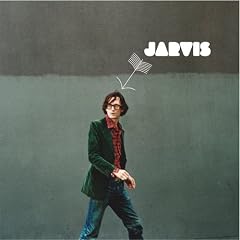
But enough about those guys. I picked up a bunch of used CDs, one of which I commend to you now: The Jarvis Cocker Record, by . . . Jarvis Cocker. Bogs down a little toward the end, but the first half of the record is outstanding. It is, to my ears, instantly rewarding, but I also think it will have some staying power (Take that, last three Weezer albums I bought! Damn, I wish I knew how to quit you!) If you don't know Jarvis, he was (is?) the lead singer and creative force behind Pulp, one of the two or three bands that reinvented Brit-pop in the early 1990s. Black Magic, Don't Let Him Waste Your Time, and I Will Kill Again (which is frankly a very chilling song) are early high points for me. So go check it out.
Tuesday, December 11, 2007
Prayer = what?
"'O Lord, how many are my foes!' is the first sentence in the first prayer in the Psalms (3:1). Brief, urgent, frightened words--a person in trouble, crying out to God for help. This is the language of prayer: men and women calling out of their trouble--pain, guilt, doubt, despair--to God. Their lives are threatened. If they don't get help they will be dead, or diminished to some critical degree. The language of prayer is forged in the crucible of trouble. When we can't help ourselves and call for help, when we don't like where we are and want out, when we don't like who we are and want a change, we use primal language, and this language becomes the root language of prayer."
Eugene Peterson, Answering God: the Psalms as Tools for Prayer
I'm just a little bit into this book, but I think I'm going to like it. It's always been hard for me to pray like I think I should, in the ACTS (SCAT? CATS? STAC?) format that a lot of us learn as a model. I get bogged down in grading myself--was that enough confession? Have I adored enough to start supplicating? Are my ratios correct? For me lately, prayer really is just inarticulate grunting and desperate wailing for help--for me, for my friends, even (a little) for my enemies. Sometimes it's just writing down a bunch of names on a post-it note and staring at it for a few minutes, thinking to myself, "I can't even begin to know how to ask God how to help so-and-so, or what mercy looks like in x situation." If you read this blog, there's a good chance you've been on that piece of paper at some point. So I just stare at those names and ask God to help them. Based on measurable "results" to date, it seems about as effective as tossing a penny into a well and making a wish--so think carefully before you ask me to pray for anything. I don't mean to be glib about it. But doesn't it rattle you when God doesn't answer your prayers in the way you think He should? From the late William Styron: "In depression . . . faith in deliverance, in ultimate restoration, is absent. The pain is unrelenting, and what makes the condition intolerable is the foreknowledge that no remedy will come -- not in a day, an hour, a month, or a minute. . . . It is hopelessness, even more than pain, that crushes the soul." I think that is one of the things I fear the most: if enough of my prayers go unanswered for long enough, I'll just check out. No more faith, hope and love. No more waiting. It probably wouldn't even happen as a conscious decision, just a slow dawning of the realization that my unbelief is so profound that I can't even say "Help my unbelief." Don't get me wrong. I'm pretty solid, theology-wise, on the perseverance of the saints. But I'm also pretty sure that there's no such thing as flesh-eating zombies, and 28 Days Later still scared the crap out of me.
Subscribe to:
Posts (Atom)